
Introduction
The global smart home industry has long been plagued by fragmentation—proprietary protocols, incompatible ecosystems, and complex integration processes that create significant challenges for B2B stakeholders. From OEM/ODM manufacturers and component suppliers to importers and global exporters, the lack of a unified connectivity standard has increased R&D costs, slowed time-to-market, and limited market reach.
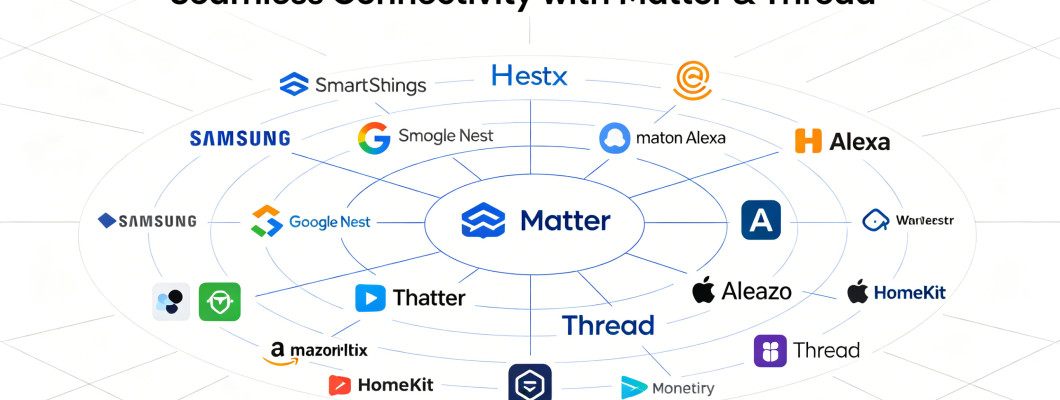
Enter Matter and Thread: two complementary technologies that have evolved to become the backbone of a unified smart home ecosystem. Backed by industry giants like Apple, Google, Amazon, and the Connectivity Standards Alliance (CSA), these protocols have transformed how smart devices communicate, setting the stage for a more interoperable, efficient, and scalable future. For B2B businesses operating in the global smart home market, understanding the history, key milestones, and future direction of Matter and Thread is critical to future-proofing product lines, optimizing sourcing strategies, and staying ahead of competitors. This SEO-optimized blog provides a detailed, B2B-focused overview of their journey and what lies ahead.
1. The Origins: Solving Fragmentation (2014–2019)
Before Matter and Thread emerged as a unified solution, the smart home industry relied on a patchwork of proprietary and open protocols—Zigbee, Z-Wave, Wi-Fi, and Bluetooth—each with its own limitations. The need for a universal, interoperable standard became increasingly urgent, paving the way for the development of Thread and, later, Matter.
1.1 Thread: The Low-Power Mesh Foundation (2014)
Thread was officially launched in 2014 by the Thread Group, a consortium of industry leaders including Google Nest, Samsung, ARM, Qualcomm, and Silicon Labs. Its core mission was to address the gaps in legacy low-power protocols like Zigbee and Z-Wave, which struggled with scalability, reliability, and IP connectivity.
Key foundational features of Thread included:
- IPv6-based mesh networking, enabling native internet connectivity and seamless communication between devices.
- Low-power design, allowing battery-powered devices (e.g., sensors, smart locks) to operate for years on a single charge—a critical advantage for both residential and commercial smart home deployments.
- Self-healing mesh architecture, ensuring network stability even if individual devices fail or are removed.
- End-to-end encryption, prioritizing data security and privacy—essential for B2B clients operating in regulated markets (EU, US).
While Thread solved critical connectivity challenges, its adoption remained limited in the early years. The missing piece was a unified application layer that would allow Thread-enabled devices to communicate across different ecosystems—a gap that Matter would later fill. As noted in Thread Group documentation, the protocol was designed to be a flexible transport layer, but it needed a common "language" to unlock its full potential.
1.2 Matter: The Unified Application Layer (2019)
In December 2019, a historic collaboration between Amazon, Apple, Google, and the Zigbee Alliance (later renamed the Connectivity Standards Alliance, CSA) gave birth to Project Connected Home over IP (CHIP)—the precursor to Matter. This unprecedented partnership aimed to eliminate ecosystem lock-in by creating a single, open, royalty-free application layer protocol that would work across all major smart home platforms.
The core vision of Matter (rebranded from CHIP in 2021) was simple: to enable any smart home device, regardless of brand or ecosystem, to communicate seamlessly. Unlike Thread (a transport layer), Matter acts as the "common language" for devices, defining how they send and receive data. Importantly, Matter was designed to work with multiple transport protocols—including Thread, Wi-Fi, and Ethernet—with Thread emerging as its preferred low-power mesh backbone.
2. Key Milestones: The Evolution of Matter and Thread (2020–2025)
Over the past five years, Matter and Thread have undergone rapid evolution, with key updates expanding their capabilities, simplifying certification, and driving industry adoption. Below are the critical milestones that have shaped their journey—tailored to B2B priorities like product development, certification, and market readiness.
2.1 2020–2021: Development and Industry Alignment
In 2020, the Thread Group expanded its membership to include Apple, which later integrated Thread border routers into its HomePod Mini (2020)—a major boost for Thread’s mainstream visibility. Meanwhile, the CSA continued to refine the CHIP specification, with over 150 companies joining the initiative by 2021. For B2B manufacturers, this alignment signaled a clear industry shift toward interoperability, prompting many to begin planning for Matter and Thread integration in their product lines.
2.2 2022: Matter 1.0 Launch—A Turning Point
On October 4, 2022, the CSA released Matter 1.0—the first stable version of the protocol. This marked a pivotal moment for the smart home industry, as it introduced:
- Support for core device types: smart lights, plugs, switches, thermostats, door locks, and basic sensors—covering the most in-demand B2B product categories.
- Native compatibility with Thread, Wi-Fi, and Ethernet, giving manufacturers flexibility in product design.
- A royalty-free SDK and open-source code (Apache License), reducing R&D costs for OEM/ODMs.
- Certification programs to ensure interoperability across ecosystems (Amazon Alexa, Apple HomeKit, Google Home, Samsung SmartThings).
For B2B exporters, the launch of Matter 1.0 meant a path to global market access—no longer would they need to develop separate SKUs for different platforms. Thread, meanwhile, saw increased adoption as the preferred transport layer for low-power devices, with its 1.4 update (2024) further optimizing battery efficiency and network commissioning for Matter compatibility.
2.3 2023–2025: Expanding Capabilities and Adoption
The CSA and Thread Group continued to iterate on their protocols, releasing updates that addressed B2B pain points and expanded use cases:
- Matter 1.1 (2023): Bug fixes and minor enhancements to improve interoperability and device performance—critical for reducing post-launch support costs for manufacturers.
- Matter 1.2 (Late 2023): Added support for large appliances (refrigerators, ACs, robot vacuums), opening new opportunities for B2B OEMs in the home appliance sector.
- Matter 1.3 (May 2024): Introduced water/energy management devices (leak sensors, valves) and kitchen appliances (ovens, dryers), aligning with global trends toward sustainability and smart home efficiency.
- Thread 1.4 (September 2024): Optimized for Matter interoperability, with improved battery efficiency for "sleepy" devices, faster network setup, and enhanced security features—key for B2B clients deploying large-scale sensor networks.
- Matter 1.4 (November 2024): Added support for HRAP (router/AP certification), solar/battery storage, EV chargers, and the LIT protocol (for longer battery life)—catering to the growing demand for smart energy solutions.
- Matter 1.5 (November 2025): A major update introducing native support for video cameras/doorbells, soil sensors, and dynamic energy pricing models—expanding Matter’s reach into high-growth B2B categories like smart security and smart gardening. This update also enhanced energy management capabilities, enabling devices to exchange standardized data on energy pricing, tariffs, and grid carbon intensity.
By late 2025, over 1,100 Matter-certified devices were available globally, with 794+ CSA members driving adoption. For B2B stakeholders, this growth meant increased demand for Matter/Thread-compatible components (e.g., ESP32-C6 modules) and a shift toward unified product lines for global markets.
A key development in 2025 was the launch of the Matter Compliant Platform Certification program by the CSA. This initiative allowed silicon vendors (e.g., Espressif, Nordic Semiconductor, NXP) to certify their development platforms, hardware, and SDKs against the Matter standard. For B2B manufacturers, this meant reduced certification costs and faster time-to-market, as they could leverage pre-certified components and inherit certified functionality—eliminating the need for full re-testing of core features.
3. Current State: Matter + Thread as the Industry Standard (2026)
Today, Matter over Thread has emerged as the gold standard for smart home connectivity—especially for battery-powered and mesh-dependent devices. For B2B manufacturers, importers, and exporters, the benefits are undeniable:
3.1 Unmatched Interoperability
Matter-certified devices work seamlessly with any Matter-compatible ecosystem, eliminating the need for platform-specific SKUs. This reduces inventory costs, simplifies R&D, and expands market reach for global exporters—critical for competing in regions like North America, Europe, and Asia-Pacific, where interoperability is increasingly a requirement for retail shelf space.
3.2 Thread’s Technical Advantages for B2B
Thread’s low-power, mesh-based design offers unique benefits for B2B deployments:
- Long battery life (5–10 years for sensors/locks), reducing maintenance costs for commercial clients (e.g., hotels, office buildings).
- Local control, allowing devices to operate without internet connectivity—ensuring reliability for critical applications like security and energy management.
- Scalability, supporting 100+ devices per network—ideal for large residential and commercial smart home projects.
- Low power consumption (5–15µA on average) compared to Wi-Fi (5–50mA), making it the preferred choice for battery-powered devices.
3.3 Growing Global Market Demand
Consumers and retailers now prioritize Matter/Thread compatibility as a "must-have" feature. For B2B sellers, offering Matter-certified products is a prerequisite for accessing major retail channels (Amazon, Walmart, European home improvement stores) and competing in high-growth markets. Global smart home revenue is projected to reach $172 billion in 2025, with household penetration hitting 55–60%—driven in large part by demand for interoperable devices.
4. Future Direction: Key Trends Shaping Matter and Thread (2026–2030)
For B2B smart home businesses, aligning with Matter and Thread’s future roadmap is essential for long-term growth. The CSA and Thread Group have outlined clear priorities that will shape the next decade—focused on expanding device support, enhancing energy efficiency, integrating AI, and simplifying adoption for manufacturers.
4.1 Full Ecosystem Expansion: All Device Categories
By 2027, Matter will complete support for all smart home device types, including:
- High-bandwidth devices: 4K cameras, video doorbells, and smart displays (building on Matter 1.5’s camera support).
- Outdoor/industrial devices: Garden sensors, irrigation controllers, and commercial lighting—opening new B2B opportunities in smart building and landscaping.
- Healthcare & wellness: Smart scales, sleep monitors, and elderly care sensors—catering to the growing aging-in-place trend.
- Automotive integration: In-car smart home control and EV charging management—aligning with the rise of connected mobility and vehicle-to-grid (V2G) solutions.
4.2 Energy Management & Sustainability (Top B2B Growth Driver)
Global demand for energy-efficient smart homes will position Matter and Thread as the backbone of home energy management systems (HEMS). Key developments include:
- Native support for solar panels, battery storage, heat pumps, and smart meters—enabling seamless integration of renewable energy sources.
- Dynamic energy pricing and grid carbon footprint tracking, allowing devices to auto-adjust usage based on utility rates and renewable energy availability (a feature introduced in Matter 1.5).
- AI-powered energy optimization, helping commercial clients (e.g., hotels, office buildings) reduce energy costs and meet sustainability goals.
This focus on sustainability aligns with EU and US energy regulations, making Matter/Thread compliance a critical factor for B2B exporters targeting these markets.
4.3 AI Integration: Predictive & Personalized Automation
By 2028, AI will be embedded into the Matter/Thread core, enabling:
- Context-aware automation: Devices will learn user habits (e.g., adjust lighting/temperature based on occupancy) to enhance convenience and energy efficiency.
- Natural language control: Local voice assistants (no cloud dependency) for Thread devices, improving reliability and privacy.
- Predictive maintenance: AI-driven alerts for device failures, reducing after-sales support costs for B2B manufacturers and improving client satisfaction.
Major ecosystem players like Google are already integrating AI (e.g., Gemini) into their smart home platforms, with plans to sync with Matter devices by 2025—creating new opportunities for B2B manufacturers to differentiate their products.
4.4 Thread Network Infrastructure: Border Routers & IPv6
Thread will become the default wireless protocol for smart home infrastructure, with key developments including:
- HRAP-certified routers: Major brands (TP-Link, Asus, Google) will integrate Thread border routers into home Wi-Fi routers (building on Matter 1.4), eliminating the need for separate hubs and reducing setup complexity for commercial clients.
- IPv6-only networks: Future Thread devices will support IPv6 natively, simplifying global connectivity and enterprise integration.
- Massive scalability: Support for 10,000+ devices per network—ideal for multi-unit buildings, smart cities, and large commercial deployments.
4.5 Simplified Certification & Manufacturing for B2B
To accelerate adoption among small-to-medium B2B manufacturers, the CSA and Thread Group will:
- Reduce certification costs and time: Building on the Matter Compliant Platform Certification program, pre-certified modules (e.g., ESP32-C6, Nordic nRF52) will become more widely available, simplifying product development and reducing certification expenses.
- Standardize testing protocols: Global compliance (CE, FCC, UL) will be streamlined, reducing barriers for B2B exporters targeting multiple regions.
- Expand fast-track recertification: Firmware updates will require minimal re-testing, allowing manufacturers to quickly adapt to new protocol versions without significant costs.
5. B2B Actionable Insights: Preparing for the Future
For OEM/ODM manufacturers, importers, distributors, and component suppliers, the future of Matter and Thread presents three key opportunities to stay competitive:
- Optimize Product Lines: Prioritize Matter/Thread certification for high-demand categories (smart security, energy management, commercial automation). Offer dual-protocol devices (Matter+Thread / Zigbee+Wi-Fi) to cater to both legacy and new markets.
- Leverage Pre-Certified Components: Use Matter Compliant Platform modules to reduce R&D time and certification costs. Partner with component suppliers (e.g., Espressif, Nordic) to access pre-integrated, certified hardware.
- Target High-Growth Markets: Focus on regions with high Matter/Thread adoption (North America, Europe) and fast-growing emerging markets (Southeast Asia, MENA), where legacy device penetration is low and demand for new technology is high. Align product features with regional regulations (e.g., EU energy efficiency standards, US FCC certification).
Conclusion
Matter and Thread have evolved from ambitious industry initiatives to the backbone of the global smart home ecosystem—solving fragmentation, driving innovation, and creating a unified market for B2B stakeholders. From Thread’s launch as a low-power mesh protocol in 2014 to Matter’s 1.5 update in 2025, these technologies have consistently addressed B2B pain points: reducing costs, simplifying integration, and expanding market reach.
As we look to 2026–2030, the future of Matter and Thread is defined by expansion, sustainability, and AI integration. For B2B smart home businesses, the time to act is now: adopt Matter/Thread certification, optimize product lines for global interoperability, and leverage pre-certified components to stay ahead of the competition. Those who align with these trends will not only meet current market demands but also position themselves as leaders in the next era of smart home innovation.
Leave a Comment